Immanuel Kant (1724–1804) is the central figure in modern
philosophy. He synthesized early modern rationalism and empiricism, set
the terms for much of nineteenth and twentieth century philosophy, and
continues to exercise a significant influence today in metaphysics,
epistemology, ethics, political philosophy, aesthetics, and other
fields. The fundamental idea of Kant's “critical philosophy” —
especially in his three Critiques: the
Critique of Pure Reason (1781,
1787), the
Critique of Practical Reason (1788), and the
Critique of the
Power of Judgment (1790) — is human autonomy. He argues that the human
understanding is the source of the general laws of nature that
structure all our experience; and that human reason gives itself the
moral law, which is our basis for belief in God, freedom, and
immortality. Therefore, scientific knowledge, morality, and religious
belief are mutually consistent and secure because they all rest on the
same foundation of human autonomy, which is also the final end of
nature according to the teleological worldview of reflecting judgment
that Kant introduces to unify the theoretical and practical parts of
his philosophical system. (from the
Standford Encyclopedia of Philosophy)

Denis Diderot (1713-1784) was the most prominent of the French Encyclopedists. He
was educated by the Jesuits, and, refusing to enter one of the learned
professions, was turned adrift by his father and came to Paris, where he
lived from hand to mouth for a time. Gradually, however, he became
recognized as one of the most powerful writers of the day. He
attacked conventional morality, with the result that he
was imprisoned at Vincennes for three months. He was released by the
influence of Voltaire’s friend Mme. du Chatelet, and thenceforth was in
close relation with the leaders of revolutionary thought. His numerous writings include the most varied forms of literary effort,
from inept licentious tales and comedies which pointed away from the
stiff classical style of the French drama, to the most daring ethical and metaphysical speculations. Like
his famous contemporary Samuel Johnson, he is said to have been more
effective as a talker than as a writer; and his mental qualifications
were rather those of a stimulating force than of a reasoned philosopher. (adapted from the
Internet Encyclopedia of Philosophy)

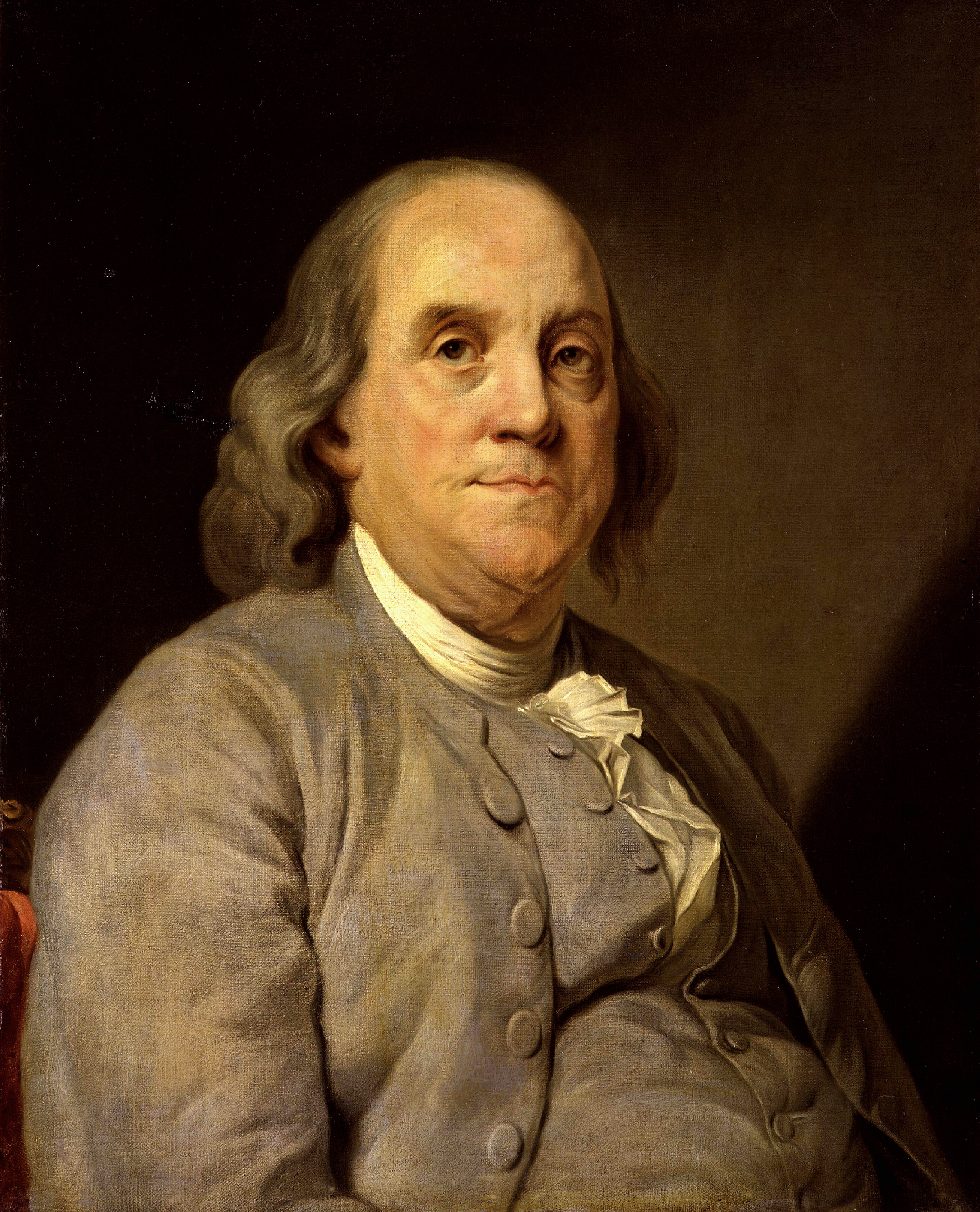
Benjamin Franklin (1706-1790) was an author, printer, political theorist, scientist, statesman, and diplomat. As a scientist and philosopher, Franklin was a leading exponent of the American Enlightenment and participated in scientific debates in both England and in France. As a statesman, Franklin supported the American Revolution and served both as the President of Pennsylvania, a member of Constitutional Convention, and later an ambassador to France. A less systematic thinker than Kant and Diderot, Franklin was nonetheless practical and pragmatic and sought to remedy common problems. This strain of practicality expressed itself in his annual publication Poor Richard's Almanack which contained calendars, weather predictions, poems, and moral aphorisms. It was also exemplified in his thirteen virtues which include such values as frugality, thrift, and humility.
Reading:
Issac Kramnick, Introduction to Portable Enlightenment Reader (PER xi-xxvii)
Immanuel Kant, "What is Enlightenment?" (PER 1-7)
Denis Diderot, "Encyclopédie" (
PER 17-21)
Benjamin Franklin, "Letter to Joseph Priestly" (
PER 73-74)
Viewings (Available through the
Picture Gallery link)
Anicent Charles Gabrielle Lemonnier,
Une soirée chez Madame Geoffrin de Lemonnier (1812)
Joseph Wright,
Experiment on a Bird in the Air Pump (1768)
Study Questions:
PLEASE READ BEFORE ANSWERING: Throughout our term, I will assign
you study questions. These questions are due at the beginning of class
and must be typed with a proper header. You
must be prepared to hand these in at the beginning of class. In
other words, answers handwritten during class will not be accepted.
Unless I state otherwise, your answers should be about a paragraph
long. Directions on how to properly compose a paragraph (with a topic sentence, cited evidence, and analysis) can be found
here. When dealing with primary texts, you should quote directly from
the text using MLA standards. Our discussions in class will stem from
your answers to these questions.
1. After reading Kramnick's introduction, what are three things that you learned about the Enlightenment period? What is the most important thing to understanding the period and why?
2. For Kant, what is the relationship between thinking and obeying? Remember, in answering this question remember to use the "paraburger" format outlined
here.
3. What is the common theme between Diderot's article on his Encyclopédie and Franklin's letter to Joseph Priestly?